
WHO updates Ebola guidance as Congo starts vaccinations
WHO issued updated temporary recommendations for Congo’s Bundibugyo Ebola outbreak as vaccine doses arrive amid high community deaths and regional spread risk.
By Doctor AI Team
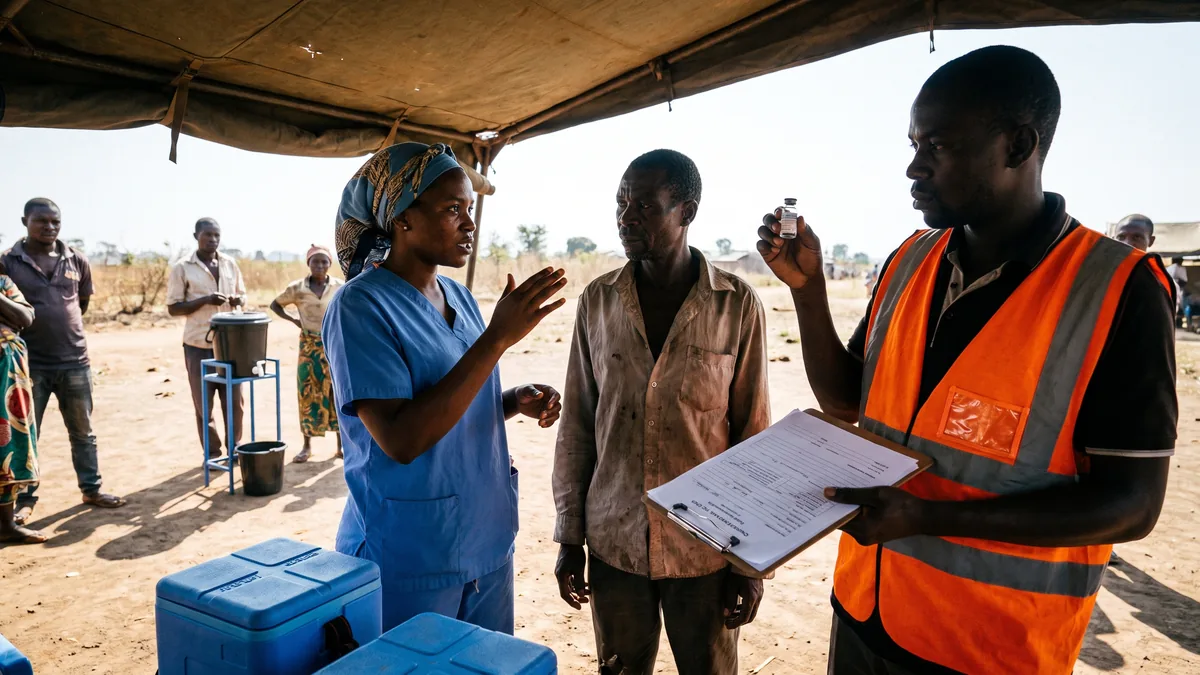
WHO has issued updated temporary recommendations to countries under the International Health Regulations (IHR) after extending the public health emergency of international concern for the Democratic Republic of the Congo’s Bundibugyo Ebola outbreak, underscoring cross-border coordination, surveillance, and sustained response as the country begins targeted Ebola vaccinations with newly arrived doses.
In an outbreak notice dated Aug. 24, WHO said the updated recommendations to States Parties emphasize coordinated outbreak control, strengthened cross-border collaboration, and sustained surveillance and preparedness to prevent further regional spread. WHO Director-General Tedros Adhanom Ghebreyesus separately said he had issued updated temporary recommendations following the Aug. 18 extension of the emergency status.
The guidance comes as health officials in Congo move to deploy vaccine doses for frontline workers and to support a clinical study aimed at determining whether an existing Ebola vaccine can protect against Bundibugyo virus, which has no approved vaccines or therapeutics, according to multiple outbreak updates and reporting.
What WHO changed and why it matters
WHO’s Disease Outbreak News report on the Bundibugyo Ebola outbreak in Congo describes the updated temporary recommendations as a push for tighter coordination across borders and a stronger surveillance posture to limit spillover into neighboring countries and to sustain an effective public health response.
Tedros’ statement linked the updated recommendations directly to the IHR process following the extension of the emergency declaration. WHO has used temporary recommendations during international health emergencies to steer national measures—such as surveillance, reporting, and travel-related coordination—without calling for blanket restrictions unless justified by risk.
The updated guidance is being issued against a backdrop of widespread community transmission, with multiple sources pointing to a large fraction of deaths occurring outside treatment settings—an indicator of missed cases and late care-seeking that can accelerate spread and hamper containment.
Congo’s outbreak: high community deaths and uneven detection
Africa CDC data cited by Global Biodefense indicated that 97% of deaths reported on Aug. 17 occurred in the community rather than in treatment centers, a pattern consistent with limited access to care, delayed presentation, or undetected transmission chains. The same report said the outbreak could be substantially larger than confirmed counts, reflecting under-ascertainment in hard-to-reach areas and surveillance gaps.
CIDRAP reported that Congo experienced its deadliest week of the outbreak, describing case-fatality rates ranging between 40% and 60% across different health zones, which it attributed to patients dying outside healthcare centers or seeking care too late in the course of infection. CIDRAP also noted that there are no approved vaccines or therapeutics against the Bundibugyo strain.
An ESCMID Epi Alert summarizing the situation as of Aug. 23 reported 5,290 confirmed cases and 2,516 deaths, describing the outbreak as driven by widespread community transmission. ESCMID added that hemorrhagic signs were reportedly infrequent, and reiterated that no approved vaccines or therapeutics are available specifically for Bundibugyo virus disease.
A separate outbreak update published by Outbreak News Today described the geographic breadth of the response, reporting that the outbreak involved 57 health zones across six provinces, and that recoveries and deaths were being recorded both inside and outside Ebola Treatment Centers (ETCs). The update reported that 22 deaths occurred within ETCs over the period it covered, alongside additional recoveries declared after repeat negative tests.
Vaccine doses arrive, with clinical study planned
Congo has begun Ebola vaccinations as part of its response, according to PBS News, which cited the country’s health minister and said approximately 50,000 doses were intended for frontline and health workers, with another 20,000 doses to be used in a clinical trial to study whether the vaccine protects against Bundibugyo Ebola.
PBS News reported that the outbreak is caused by the Bundibugyo type of Ebola virus, and that the vaccine being deployed—Ervebo—is approved against Zaire ebolavirus rather than Bundibugyo, making the planned trial a key effort to determine cross-protection in the current emergency.
The arrival of vaccine doses is occurring late in the trajectory of an outbreak that multiple sources describe as historically severe for the country. Human Rights Research characterized the event as Congo’s deadliest Ebola outbreak on record and reported that the United Nations and other global organizations have announced response plans. The group said WHO and Africa CDC created a response plan in June to support essential health services, and that the UN humanitarian aid office (OCHA) allocated funding for response activities.
Regional preparedness and cross-border coordination in focus
WHO’s updated temporary recommendations place particular weight on cross-border collaboration—an emphasis echoed indirectly by the outbreak’s pattern of community transmission and the surveillance limitations described by Africa CDC data in Global Biodefense.
Separately, other infectious disease outbreaks have continued to draw attention to the importance of rapid detection and vaccination coverage, including measles. A local health alert from Kentucky officials provided an update on a measles outbreak, underscoring how routine immunization gaps and delayed case identification can drive outbreaks—though the Kentucky alert concerns a different pathogen and setting than Congo’s Ebola emergency.
What to watch next
Key near-term indicators include whether the updated WHO recommendations translate into improved cross-border reporting, faster detection of suspected cases, and more effective isolation and care pathways—particularly in areas where deaths are occurring largely outside formal treatment centers, as cited in Africa CDC data.
Another pivotal development will be the rollout and evaluation of vaccination activities described by PBS News, including the planned clinical trial assessing whether an existing vaccine can protect against Bundibugyo Ebola. Results of such work, if made available, could inform future outbreak preparedness for Bundibugyo virus, which CIDRAP and ESCMID note lacks approved vaccines or therapeutics.
For now, WHO’s updated IHR recommendations, paired with escalating operational support and the start of vaccinations, mark a new phase of the response—one focused on sustaining control measures while attempting to close surveillance gaps that can allow transmission to persist undetected.
References & Links
- WHO updated temporary recommendations for Congo’s Ebola outbreak: WHO Disease Outbreak News
- Statement by Tedros Adhanom Ghebreyesus on extending the emergency and issuing recommendations: Tedros post
- Situation snapshot from ESCMID Epi Alert (cases and deaths as of Aug. 23): ESCMID
- Reporting on deadliest week and Bundibugyo treatment limits: CIDRAP
- Africa CDC figures on community deaths and surveillance gaps cited in reporting: Global Biodefense
- Details on Congo starting Ebola vaccinations and planned clinical study: PBS News
- Additional geographic context on health zones and ETC deaths: Outbreak News Today
This article summarizes publicly available health news and research. It is not medical advice.


