
Airport air sampling detects COVID and flu viruses
A CIDRAP report highlights airport air sampling that detected SARS-CoV-2 and influenza, underscoring surveillance potential and ongoing interpretive limits.
By Doctor AI Team
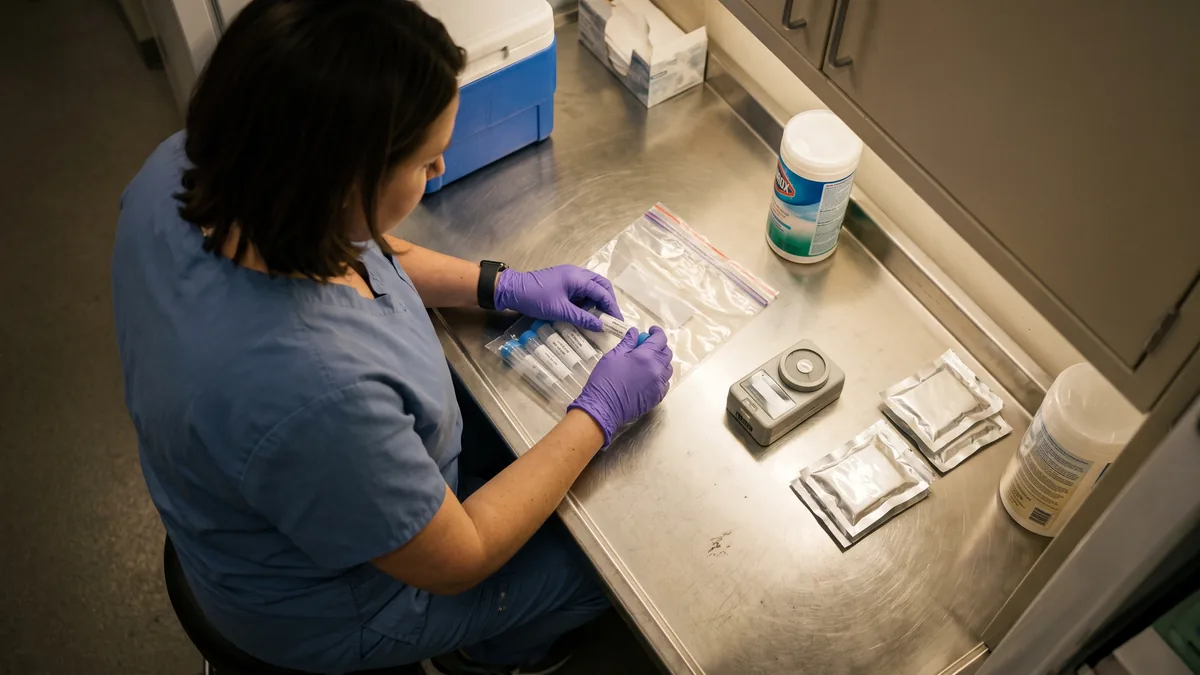
Air sampling in airports has detected genetic material from SARS-CoV-2 and influenza viruses, a finding that researchers and public health experts say could help strengthen respiratory virus surveillance in high-traffic hubs, according to a report from the University of Minnesota’s Center for Infectious Disease Research and Policy (CIDRAP).
The CIDRAP coverage, based on an airport air-sampling study it reviewed, points to the potential of monitoring shared indoor air as a complementary tool to existing approaches such as clinical testing and wastewater surveillance—particularly in places where travelers from many regions mix in close quarters. But the report also emphasized a key caveat: detecting virus in air samples does not, on its own, show that infectious virus is present or that transmission occurred.
The renewed attention comes as health agencies continue to frame pandemic readiness around earlier detection and broader situational awareness. The World Health Organization (WHO) has said preparedness for epidemic-prone diseases relies on strategies that strengthen prevention, monitoring, and coordinated response capacity across countries and sectors.
What the airport air-sampling findings show
CIDRAP reported that researchers captured signals of both COVID-19 and influenza viruses through airport air sampling, highlighting the ability of air monitoring to pick up circulating respiratory pathogens in a setting defined by rapid turnover and international movement.
Airports are a distinct surveillance environment: passengers arrive from many locations, spend time in security lines and boarding areas, and share indoor air for extended periods. In principle, that combination makes them useful sites to detect pathogens that are increasing in one region and beginning to appear elsewhere.
Still, CIDRAP underscored an interpretive limitation common to environmental sampling. Air samples may detect viral RNA, but RNA detection does not necessarily equate to viable virus or a direct indicator of exposure risk at the time and place of sampling. That distinction matters when translating surveillance signals into public communication or policy decisions.
Why airports are attractive surveillance sites
CIDRAP’s report situates airports as “sentinel” environments where surveillance might identify emerging signals earlier than routine clinical reporting in some locations.
Compared with data streams dependent on people seeking care, environmental monitoring can in theory capture broader population-level signals, including from travelers who are mildly symptomatic or asymptomatic. The approach may also offer a way to monitor multiple viruses at once, depending on the laboratory methods used and the design of the sampling network.
What air sampling can’t answer on its own
CIDRAP’s report also highlighted the limits of what air monitoring can prove without additional data. Environmental sampling can flag presence, but it typically cannot establish who was shedding, when shedding occurred, how much infectious virus was in the air, or whether anyone was infected as a result.
For that reason, experts generally frame environmental monitoring—air sampling included—as an adjunct rather than a replacement for other surveillance and epidemiologic tools.
How this fits into global epidemic preparedness
The findings arrive amid ongoing efforts to modernize surveillance and pandemic preparedness, a theme WHO has repeatedly emphasized in its work on preventing and controlling epidemic-prone diseases.
WHO’s preparedness framework stresses that early detection and situational awareness depend on coordinated systems that can integrate multiple streams of information. Environmental monitoring, including approaches that assess pathogens in shared spaces, is one potential component of that broader architecture.
In recent years, the public health community has expanded the concept of “where surveillance happens,” moving beyond clinics and laboratories to include wastewater systems, congregate settings, and other shared environments. Airport air sampling is part of that same shift—bringing monitoring closer to points of mixing and movement.
Complementary surveillance, not a single “silver bullet”
CIDRAP’s reporting points to a practical message for public health leaders: air sampling could add value, but its signals need context.
In respiratory virus surveillance, that context often includes clinical data (cases, hospitalizations), genomic information (variants and subtypes), and other environmental signals. Taken together, these can help interpret whether an air-sampling detection reflects a small number of introductions, a growing outbreak, or background circulation.
Public health implications for COVID-19 and influenza
CIDRAP framed the airport findings as relevant to both SARS-CoV-2 and influenza, two viruses that continue to drive seasonal and episodic surges and place strain on healthcare systems. Detecting them in airport air samples reinforces the idea that shared indoor air can carry measurable viral signals—an observation consistent with the respiratory transmission routes that have shaped COVID-19 control strategies and influenza mitigation planning.
However, CIDRAP also cautioned against overinterpreting detection events as direct measures of risk. For decision-makers, the practical utility of airport air sampling depends on how quickly results can be obtained, how consistently sampling can be performed, and how effectively signals can be integrated with other surveillance streams.
Operational questions: timing, scale, and standardization
CIDRAP’s report highlights the promise of the approach, but it also points to real-world operational questions that typically determine whether surveillance tools are adopted at scale:
- Timeliness: whether sampling and analysis can deliver signals quickly enough to inform action.
- Coverage: whether monitoring can be maintained across multiple airports or only in limited pilots.
- Standardization: whether methods can be harmonized to compare results across locations and over time.
These considerations influence whether airport air sampling becomes a sustained part of respiratory virus surveillance or remains primarily a research tool.
What to watch next
CIDRAP’s coverage suggests the next phase will be less about whether viral signals can be detected—this report indicates they can—and more about how such detections can be operationalized responsibly.
Future work is likely to focus on correlating air-sampling signals with more traditional indicators, clarifying what specific thresholds might mean in practice, and determining which locations within airports yield the most useful data. Public health agencies and researchers will also weigh cost, feasibility, and privacy considerations as monitoring technologies evolve.
For now, CIDRAP’s report adds to a growing body of reporting and research suggesting that environmental monitoring in shared spaces can broaden the surveillance toolkit, while reinforcing that public health interpretation must remain cautious and evidence-based.
References & Links
- CIDRAP coverage of airport air sampling detecting viruses: CIDRAP report
- WHO overview on preparing and preventing epidemics and pandemics: WHO preparedness framework
This article summarizes publicly available health news and research. It is not medical advice.


